Arabic Letters for Kids: The Complete Step-by-Step Guide
Learning the Arabic alphabet is the single most critical first step in your child’s Quran journey. Without mastering the Arabic letters their shapes, sounds, and correct pronunciation, a child cannot read a single word of the Quran accurately. The good news is that with the right approach, teaching Arabic Letters for Kids can be a genuinely enjoyable, engaging experience that lays a lifelong foundation. At Quran Classes Academy, our certified teachers have helped thousands of children master the Arabic alphabet through proven, structured, step-by-step methods.
Why Arabic Letters Are the Essential First Step for Quran Reading
Many parents make the mistake of trying to rush their child directly into Quran reading, skipping proper Arabic letter foundation work. This creates a serious problem. Children who do not master the Arabic alphabet correctly from the beginning develop flawed pronunciation habits that become extremely difficult to correct later.
The Arabic alphabet has 28 letters. Each letter has a unique sound, its Makhraj (precise place of articulation in the mouth and throat), which determines whether the word is pronounced correctly or not. In the Quran, a single mispronounced letter can change the meaning of a word entirely. This is why mastering Arabic letters properly, from the very beginning, is absolutely non-negotiable.
Key Facts Every Parent Must Know About Arabic Letters for Kids
Before teaching Arabic letters to your child, understanding these essential facts will transform the way you approach the process.
Arabic Is Read From Right to Left
Unlike English, Arabic is written and read from right to left. This is the first concept children must understand and get comfortable with before they begin recognising letters. For most children, this adjustment happens quickly, especially when it is introduced early and consistently.
Letters Change Shape Depending on Position
This is one of the most important and often overlooked facts about Arabic letters. Every Arabic letter has up to four different forms depending on where it appears in a word at the beginning, in the middle, at the end, or standing alone. A child who only learns the isolated form of each letter will struggle enormously when they encounter letters inside real Quranic words. Proper teaching addresses all four forms from the start.
Each Letter Has a Unique Sound — Makhraj
Arabic has sounds that do not exist in English: deep throat sounds, emphatic consonants, and letters that require precise tongue and lip positioning. These sounds must be learned correctly from a certified teacher who can demonstrate and correct them in real time. No app or worksheet can replace this human correction.
Step-by-Step Method to Teach Arabic Letters to Kids
Here is the proven, structured approach our certified teachers use to guide children from zero knowledge to confident Arabic letter recognition.
Step 1 — Introduction Through Listening
Before any writing or reading begins, expose your child to Arabic letter sounds through audio. Play Arabic alphabet songs, use sound books like the Let’s Learn Alif Baa Taa sound book, and simply let your child hear the letters repeatedly in a fun and pressure-free environment. The ear must recognise the sounds before the eye recognises the shapes.
Step 2 — Visual Recognition — Alif to Yaa
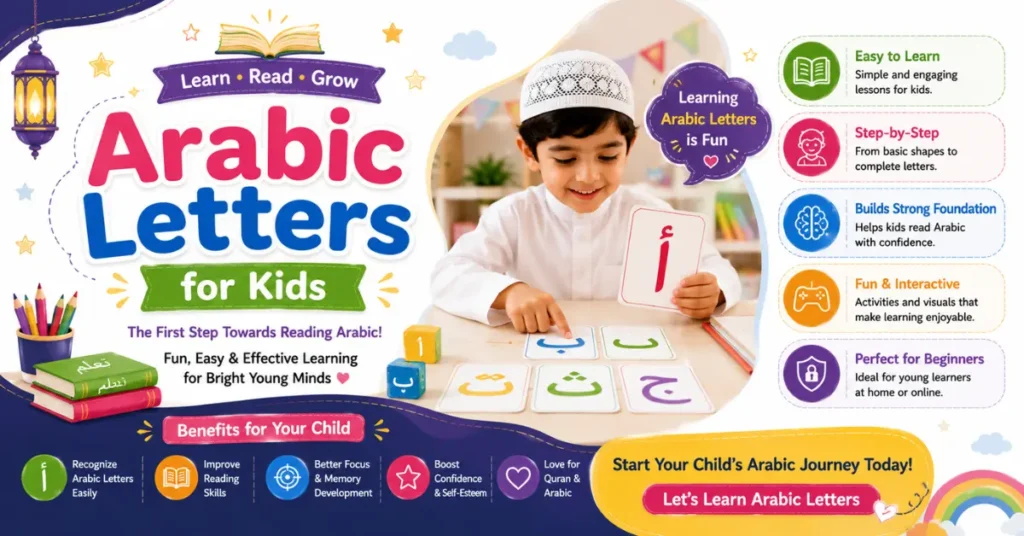
Introduce the 28 letters one by one, starting with Alif, then Baa, then Taa, in order. Use colourful flashcards that show the letter clearly, its name, and an illustration of a familiar word that begins with that letter. Our certified female Quran teachers online use engaging visual tools during live sessions to make this stage genuinely exciting for young learners.
Step 3 — Correct Pronunciation — Makhraj Practice
This is the most critical step and the one that requires a qualified human teacher. Each letter must be pronounced from its correct Makhraj. For example, the letter Ayn (ع) comes from deep in the throat a sound that does not exist in English at all. A certified teacher demonstrates each sound, listens to the child repeat it, and corrects any errors immediately before they become habits.
Step 4 — Letter Forms — Beginning, Middle, End, and Isolated
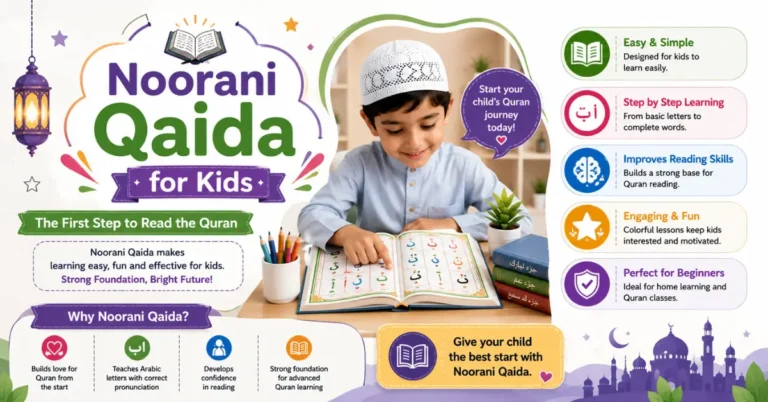
Once a child can recognise and pronounce all 28 letters in their isolated form, the next breakthrough step is learning how each letter transforms when connected to other letters. This is taught systematically through Noorani Qaida for kids, the gold standard foundational book used by millions of children worldwide.
Step 5 — Harakaat — Short Vowels
The final step before full Quran reading is mastering the three short vowels Fatha (a sound), Kasra (i sound), and Damma (u sound). These small marks above and below letters completely change how a letter is pronounced. Mastering Harakaat is what transforms letter recognition into actual reading ability.
Proven Fun Activities to Teach Arabic Letters at Home
These hands-on activities make learning Arabic letters genuinely enjoyable for children — and dramatically accelerate their progress.
Sand Tray Tracing Fill a shallow tray with sand or flour and have your child trace each Arabic letter with their finger. This multi-sensory activity engages both visual and physical memory — making letters stick far more effectively than writing on paper alone.
Flashcard Memory Games: Lay out Arabic letter flashcards face down and play a matching game where your child must find pairs. This transforms repetitive letter practice into an exciting challenge that children genuinely want to repeat.
Playdough Letter Shapes: Give your child playdough and ask them to form each Arabic letter they have learned. The physical act of shaping each letter builds a deep visual memory of its unique form.
Arabic Alphabet Songs. Songs like the famous Zaky Arabic Alphabet nasheed on YouTube use rhythm and melody to help children memorise all 28 letters in sequence. The musical pattern makes recall effortless and natural.
At what age should kids start learning Arabic Letters?
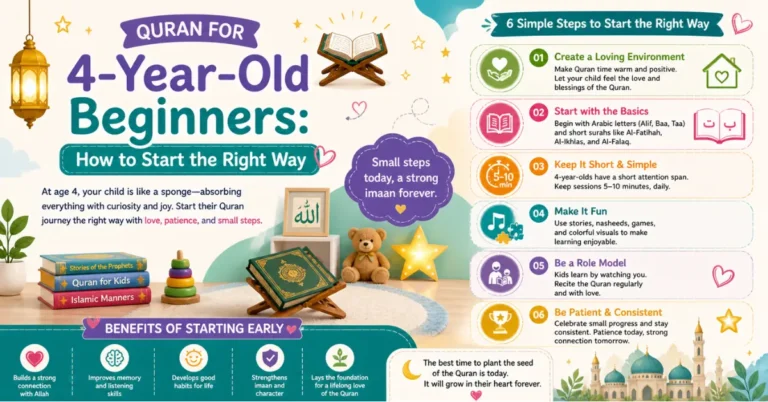
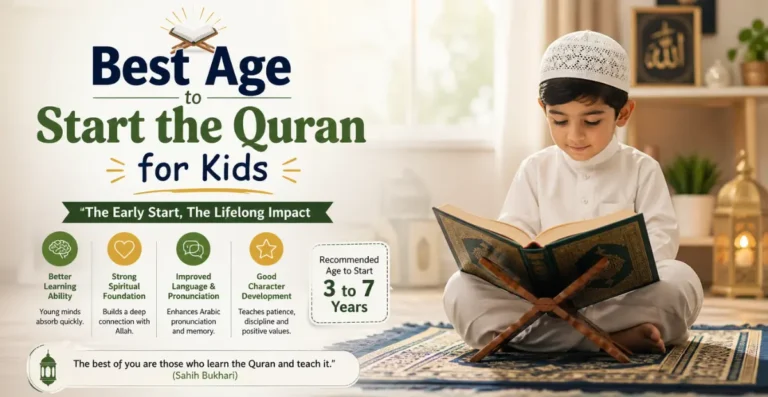
For families in the USA and UK, our online Quran classes for kids in the USA welcome children from age 4 onwards for Arabic letter introduction. Here is a simple age guide.
Age 3 to 4 — Pure listening and exposure. Play Arabic alphabet songs and use colourful picture books. No formal letter writing yet, build familiarity through fun and sound.
Age 5 to 6 — Ideal age to begin structured Arabic letter recognition through Noorani Qaida. Children at this age have the focus and memory to make rapid, consistent progress.
Age 7 and above — Older children often master the Arabic alphabet faster because their comprehension is stronger. Starting at any age is always the right decision.
Frequently Asked Questions
How do I teach Arabic letters to my child at home?
Start by listening to Arabic alphabet songs and use colourful flashcards daily. Then introduce letters one by one through Noorani Qaida, focusing on correct Makhraj pronunciation for each letter. Keep sessions short, 10 to 15 minutes for young children, and celebrate every letter your child masters to keep motivation high.
How many Arabic letters are there, and how long does it take to learn them?
There are 28 letters in the Arabic alphabet. Most children recognise all 28 letters in their isolated form within 4 to 8 weeks with consistent daily practice. Learning all four forms of each letter and mastering correct pronunciation typically takes 3 to 6 months through structured Noorani Qaida lessons.
At what age should kids start learning the Arabic alphabet?
Children can begin exposure to Arabic letter sounds from age 3 through songs and picture books. Structured letter recognition through Noorani Qaida works best from age 5 to 6, when children have the focus and memory to make consistent progress.
Why do Muslims read Arabic from right to left?
Arabic is a Semitic language that has been written from right to left since ancient times, long before the Quran was revealed. This is simply the natural direction of the Arabic script, and children adapt to it very quickly with consistent practice and the right teaching approach.
Do kids need a teacher to learn Arabic letters, or can they learn from apps and videos?
Apps and videos are excellent supplementary tools, but they cannot replace a qualified human teacher. A certified teacher listens to your child’s pronunciation, identifies incorrect Makhraj in real time, and corrects errors before they become permanent habits. No app can do this. For Arabic letters specifically, correct pronunciation from the very beginning is essential.
Give Your Child the Gift of Arabic Letters — the Right Way
Mastering Arabic letters is the foundation of everything, from Quran reading to Tajweed, Hifz, and a lifelong connection with the words of Allah. At Quran Classes Academy, our certified teachers guide every child through this essential foundation with patience, expertise, and genuine care.
Book a free 7-day trial today — no commitment, no payment required.